
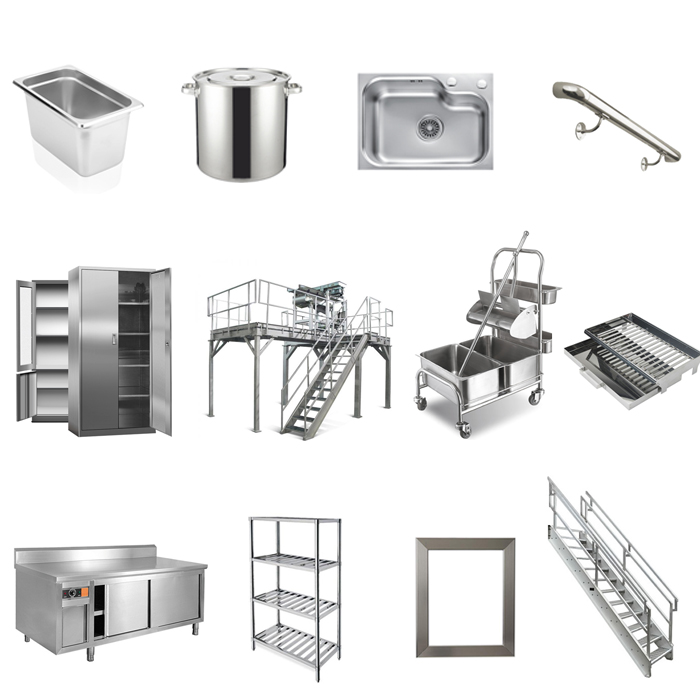
Stainless steel fabrication is the process of transforming stainless steel into custom parts and structures. It involves various techniques like cutting, forming, welding, machining, and finishing, making it a versatile choice for diverse applications. This comprehensive guide delves into the world of stainless steel fabrication, covering its processes, applications, and challenges.
What is Stainless Steel Fabrication?
Stainless steel fabrication is the art and science of shaping, joining, and finishing stainless steel to create specific components or complete structures. It leverages the unique properties of stainless steel, such as its corrosion resistance and durability, to meet the demands of various industries.
Understanding the Basics
Fabrication goes beyond simply cutting metal. It’s a complex process that considers material properties, design specifications, and the desired end-use. The choice of fabrication methods depends on factors like the material grade (e.g., 304, 316), the complexity of the design, and the required performance characteristics.
Key Fabrication Processes and Methods
Several techniques are employed in stainless steel fabrication, each with its strengths and best-suited applications.
Cutting Techniques
Precision cutting is the first step in shaping stainless steel. Different methods are used, depending on the desired accuracy, material thickness, and production volume.
- Laser Cutting: Ideal for intricate shapes and precise cuts with minimal heat distortion.
- Waterjet Cutting: A cold cutting process suitable for thick materials and heat-sensitive applications, eliminating the heat-affected zone.
- Plasma Cutting: A faster option for thicker materials, but it may produce a larger heat-affected zone compared to laser or waterjet.
- Mechanical Cutting: Using methods like shearing or sawing for simpler cuts.
Forming and Bending
Once cut, stainless steel sheets or plates are formed into the required shapes.
- Press Braking: Uses a press brake to bend the metal to specific angles, forming enclosures and brackets.
- Roll Forming: Employs rollers to create curved shapes or continuous profiles.
- Stamping: Uses dies to shape the metal into complex forms, suitable for high-volume production.
Welding Techniques
Welding is crucial for joining stainless steel components, ensuring structural integrity.
- TIG (GTAW) Welding: Provides high-quality, precise welds, often used for critical applications.
- MIG (GMAW) Welding: A faster welding method suitable for various thicknesses and applications.
- Spot Welding: Used for joining thin sheets of metal, common in automotive and appliance industries.
- Resistance Welding: Another method for joining metals by applying heat and pressure.
See our guide on stainless steel welding techniques for more details
Machining Processes
Machining involves removing material to create precise features.
- Milling: Uses rotating cutters to remove material and create complex shapes.
- Drilling: Creates holes of various sizes.
- Turning: Shapes cylindrical parts using a lathe.
Finishing Operations
Finishing enhances the appearance and corrosion resistance of fabricated stainless steel parts.
- Polishing: Creates a smooth, reflective surface.
- Grinding: Removes imperfections and prepares the surface for further finishing.
- Electropolishing: Uses an electrochemical process to remove a thin layer of surface material, improving corrosion resistance and creating a bright finish.
- Passivation: Forms a protective oxide layer on the surface, further enhancing corrosion resistance.
Applications of Fabricated Stainless Steel
Stainless steel’s durability and corrosion resistance make it ideal for numerous applications.
- Architecture: Railings, platforms, and decorative trim.
- Industrial Equipment: Tanks, vessels, and machinery components.
- Medical Devices: Surgical instruments and equipment.
- Food Processing: Equipment that needs to be sanitary and corrosion resistant.
- Marine Environments: Components exposed to saltwater.
Challenges in Stainless Steel Fabrication
Fabricating stainless steel presents unique challenges.
- Work Hardening: Stainless steel hardens quickly during forming and machining, requiring careful process planning and tooling.
- Thermal Conductivity: Low thermal conductivity can lead to heat buildup during cutting and welding, affecting precision.
- Surface Finish: Fabrication methods can affect the surface finish, necessitating post-fabrication treatments to meet aesthetic or hygienic requirements.
Choosing the Right Fabrication Partner
Selecting the right fabrication partner is crucial for project success.
- Experience: Look for a fabricator with experience in your specific industry and project requirements.
- Equipment: Ensure the fabricator has the necessary equipment for your project’s needs, including CNC machinery, laser cutters, and welders.
- Quality Control: Verify that the fabricator has robust quality control processes in place.
- Material Certification: Ensure that the fabricator can provide material certifications to guarantee the quality and grade of stainless steel.
Find a reputable stainless steel fabrication service.
Conclusion
Stainless steel fabrication is a versatile and critical process for creating durable and corrosion-resistant components and structures. From cutting and forming to welding and finishing, each step requires precision and expertise. Understanding these processes, the associated challenges, and the importance of selecting the right fabrication partner is key to successful project outcomes. If you’re looking for Stainless Steel Fabrication solutions, contact a reputable fabricator to discuss your project requirements.